
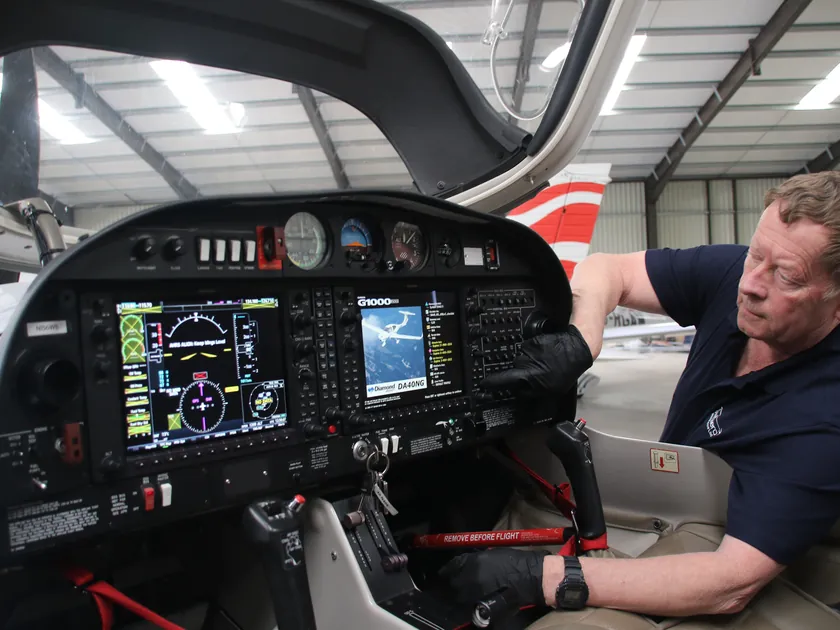

What avionics work involves
Avionics covers the electrical and electronic side of the aeroplane: the kit you use to navigate, to talk to someone and to know what the aircraft is doing. On a typical piston single or twin that means radios, transponder, GPS, audio panel, autopilot, instruments, lighting and every loom behind them.
- Installing and removing radios, transponders, GPS units and audio panels
- Wiring and loom repair, including chafed, corroded or previously modified runs
- Antenna fitting, bonding and replacement
- Instrument replacement, including swaps between analogue and digital
- Fault diagnosis on the intermittent problems that only show up in the air
Most jobs are part fitting and part detective work. A radio that goes quiet at height is rarely a broken radio; more often it is the aerial, the earth bond or a connector somebody disturbed years ago. Finding that costs time behind the panel rather than a new black box.
Keeping your equipment legal and serviceable
Some avionics work is driven by what you want. A good deal of it is driven by what the aircraft needs in order to stay legal for the flying you actually do. In UK general aviation the recurring items usually include:
- VHF radios that support 8.33 kHz channel spacing
- A serviceable Mode S transponder for the airspace you intend to use
- An ELT with an in-date battery, correctly registered to the aircraft
- Pitot-static and transponder testing at the interval your maintenance programme sets
- A compass check after anything that changes the metal or the wiring near it
Tell us your panel and what's due — we'll confirm what we carry out ourselves and what we co-ordinate with a specialist.
Glass panels and legacy instruments
Panels across the GA fleet run from full glass to the original 1970s fit, and both need looking after. Glass brings software versions, databases and a data card to keep current, and it fails differently: a screen tends to go, whereas a vacuum-driven gyro degrades quietly over months while you carry on flying behind it.
Older panels are usually a mixture, and the mixture is the point. A vacuum system, a wet compass and a stack of analogue radios can stay perfectly serviceable for years provided the parts remain available and the wiring is kept honest. Where that stops being true, half the job is deciding what to replace and what to leave alone. An upgrade that touches every wire behind the panel costs a lot more than the box on the front of it.
If the aircraft is already booked in for its annual inspection, that is normally the sensible time to deal with panel work too. Mention both when you get in touch.