
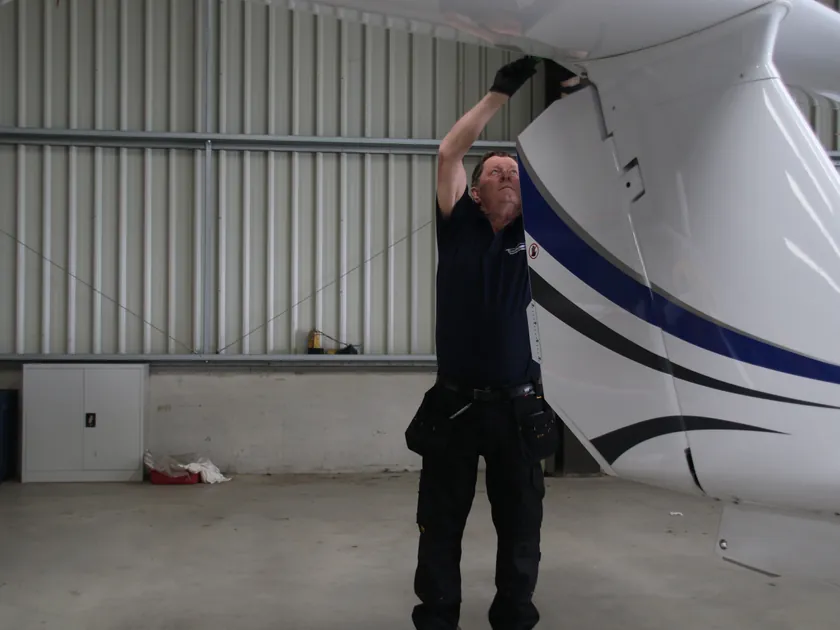

What an annual inspection covers
An annual is a full look at the aircraft against the manufacturer's inspection schedule, not a walk round with a torch. Panels and cowlings come off, the airframe and the engine are inspected, and what is found is written up before the aircraft goes back into service.
Across UK general aviation, an annual normally takes in:
- Airframe and engine inspection to the manufacturer's schedule for the type
- Flying control checks, cable tensions and rigging
- Cylinder compression readings and an oil filter inspection
- A corrosion survey, weighted towards the areas the type is known for
- A review of airworthiness directives and service bulletins for compliance
- Logbooks, worksheets and the paperwork that goes with the aircraft
What yours needs depends on the type, its age and the maintenance programme it is on. Work that goes beyond the inspection itself is quoted separately: engine overhaul, structural repairs, corrosion treatment and the rest of our maintenance services.
Scheduled checks between annuals
Not everything falls due once a year. Most maintenance programmes carry hours-based checks in between, and where a type's programme uses 50-hour and 100-hour intervals those cover oil and filter changes, a shorter look at the engine and airframe, and any item the manufacturer has put on an hours limit.
Life-limited parts, hoses and instrument checks are tracked separately again, each on its own hours or calendar limit. Send us your programme and current hours and we will tell you what is coming up.
Airworthiness review
An airworthiness review is a separate process, run on its own cycle, covering the aircraft's records as well as the aircraft. Passing an annual does not by itself deal with it, and the two are easy to conflate.
An annual inspection and an airworthiness review are two different things. Tell us where your aircraft is in its ARC cycle and we will confirm what we handle in-house and what we co-ordinate for you.
What to send us
To give you a sensible answer we need the basics up front:
- Registration and aircraft type
- Airframe, engine and propeller hours
- The date of the last annual, and who carried it out
- Defects you already know about, and anything deferred at the last check
The more of that we have before the aircraft arrives, the fewer surprises there are once the panels are off.